
This page may contain affiliate links. If you buy through them, The Gear Stash may earn a commission at no extra cost to you. It never changes what we recommend. How we make money
Evidence note: This 2026 buying guide is based on manufacturer product pages and published specifications, not hands-on testing by The Gear Stash. The recommendations are buying guidance, not measured performance rankings. Product listings do not guarantee stock in your size or region.
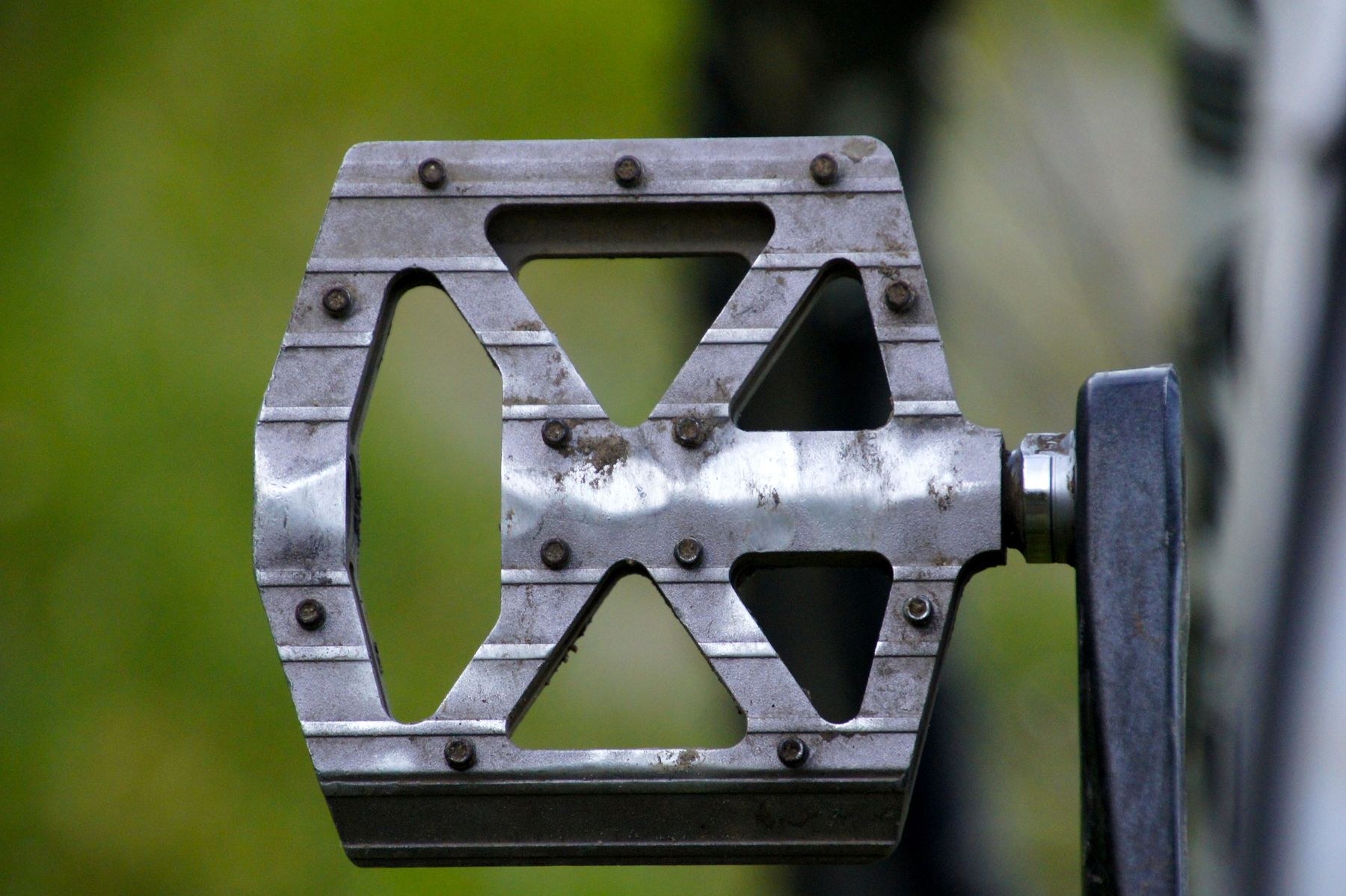
Start a flat-pedal comparison with the shoes you will ride in. Platform dimensions, the position of the pins and the shape around the axle tell you more about likely fit than an “aggressive grip” label. Actual grip still needs to be judged with your shoes and technique; a spec sheet cannot settle it.
The three pedals below cover a size-specific aluminum option, a current two-size composite design and a serviceable aluminum pedal with reversible pins.[1][2][3] They are not ranked by measured traction or durability. The aim is to help you decide which design is worth trying, then check the exact version before buying.
Quick comparison
| Pedal | Manufacturer dimensions | Body and pins | Buying tradeoff |
|---|---|---|---|
| Crankbrothers Stamp 7 | Large: 114 × 111 mm; 11–13 mm profile.[1] | Forged 6061-T6 aluminum; 10 adjustable pins per side.[1] | Small and Large choices; match the size to your shoe rather than choosing Large automatically. |
| Race Face Chester, current two-size version | Small: 105 × 100 mm; Large: 115 × 110 mm; 16 mm platform height.[2] | Nylon composite; 11 pins per side, nine metal and two molded.[2] | Check the generation: older Chester listings may not match these dimensions or pins. |
| DMR Vault | 105 × 105 mm platform; 17 mm concave footbed.[3] | 6061 aluminum; reversible Flip pins and serviceable bush/bearing internals.[3] | One platform size covered here; compare its outline with your sole, not the “large” marketing label. |
Crankbrothers Stamp 7: an aluminum option with size guidance
Crankbrothers offers the Stamp 7 in Small and Large. The Large page lists a 114 × 111 mm footprint, an 11–13 mm profile and 10 adjustable pins per side.[1] The size choice is the main reason to start here if you want an aluminum pedal and do not want a single platform size chosen for you.
The brand recommends Small for US shoe sizes 5–10 / EU 37–43 and Large for US 10–15 / EU 43–49.[1] Treat those ranges as a starting point. At the overlap, compare the actual shoe sole against both platforms if possible; width and tread shape can matter as much as the number on the shoe.
The aluminum body and concave profile do not establish how it will feel with your shoes. Check where the pins contact the sole and whether you can reposition your foot comfortably. Crankbrothers links a refresh kit and technical documents from the product page, which are useful to review before you commit to maintaining the pedal.[1]
View Crankbrothers Stamp 7 Large details · Check the Stamp 7 Small at Jenson USA · Check Small and Large at Competitive Cyclist. Check the exact version, size and availability before buying.
Race Face Chester: compare the current version, not just the name
The current Chester has a nylon-composite body and two platform sizes: 105 × 100 mm Small and 115 × 110 mm Large. Race Face lists 11 pins per side, consisting of nine metal pins and two co-molded composite pins, and describes the internals as fully serviceable.[2] That is a different buying proposition from a generic description of the older one-size Chester.
The brand describes a revised body without the old convex bulge around the spindle.[2] This is a design change to inspect, not a reason to claim the pedal will eliminate pressure points for everyone. Put your riding shoe on the platform and check the support and pin contact across the sole.
Chester belongs on the shortlist if you want to compare a composite pedal with the aluminum alternatives. We have not established a current “under $50” deal or a blanket durability advantage for either material. Compare the actual checkout price, the right size and the availability of service parts instead.
View current Race Face Chester details · Jenson USA: Chester Small / Chester Large. Check the exact version, size and availability before buying.
DMR Vault: a defined platform with tunable pins
DMR lists the Vault with a 105 × 105 mm platform, a 17 mm concave footbed and a 6061 aluminum body. It uses a serviceable DU bush and cartridge bearing, and the Flip pins can be reversed to adjust their presentation.[3] Those details make it worth considering if you want a pedal you can tune and maintain rather than replace at the first sign of wear.
The Vault is not the largest platform in this comparison: the listed Stamp 7 Large and Chester Large dimensions exceed its footprint.[1][2][3] That does not make the Vault too small. Compare the usable shape with your sole and preferred foot position rather than buying the biggest rectangle in the table.
Likewise, its listed thickness does not let us predict how many rocks you will hit. Crank length, bottom-bracket height, line choice and pedal timing also matter. We do not infer extra durability from a thicker profile or promise that a slimmer pedal will avoid strikes.
View DMR Vault details · Check price at Jenson USA. Check the exact version, size and availability before buying.
Choose the shoe-and-pedal combination
Try the pedal with the shoes you intend to use, not a soft casual shoe you happened to wear to the shop. Check that the sole sits securely on the platform and that the pins contact tread where they can engage it. Deeply lugged soles can leave some pins between tread blocks; a bigger platform alone may not solve a poor match.
Pin height and placement deserve a separate check. More pins do not automatically mean more useful grip, and maximum pin exposure may make foot repositioning less comfortable. Begin with the manufacturer’s standard arrangement and use only compatible replacements or adjustments. Avoid treating sharp pins as a substitute for controlled foot placement.
Serviceability and installation checks
- Before buying, look up the correct replacement pins and rebuild parts for the exact generation. A serviceable design is most useful when you can obtain those parts.
- Check crank-thread compatibility, left/right markings and the maker’s installation instructions. Start the threads carefully by hand and use the specified lubrication and torque; ask a mechanic if you are unsure.
- After a hard pedal strike, inspect the body, axle and pins. Stop riding a pedal with visible damage, a bent axle or abnormal play until it has been assessed.
- Check the pedals periodically for loose or damaged pins and bearing play. Follow the model’s service instructions rather than assuming that sealed bearings mean no maintenance.
Flats still require care
Metal pins can injure shins if a foot slips. Practice foot placement and repositioning on easy terrain before changing to a more demanding trail, and consider suitable protection. Being able to lift a foot off a flat pedal is useful, but it is not proof that flats are safer than clipless pedals in every situation.
Choose the Stamp 7 if its size options and aluminum design fit your preferences, the current Chester if you want to compare a two-size composite pedal, or the Vault if its platform shape and reversible pins suit you.[1][2][3] The best next step is a shoe-on-platform fit check and confirmation of the exact listing, not a material-based upgrade rule.